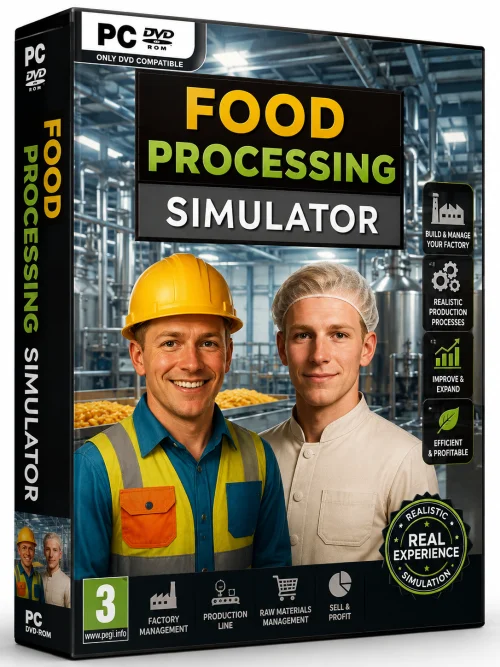
Food Processing Simulator for Windows 10/11
Optimize your PC with the fully compatible Windows 10 version.
Overview
Introduction and Overview of Food Processing Simulator
The Food Processing Simulator is a cutting-edge, interactive software designed to replicate real-world food production and processing environments. This powerful simulation tool allows users to design, test, and optimize food processing workflows without the risk, cost, and waste associated with physical trials. Whether you are a food engineering student, a professional process engineer, or a factory manager looking to improve efficiency, this simulator provides a safe and controlled virtual sandbox to explore everything from raw material intake to packaging.
The software combines advanced physics, realistic machine behavior, and detailed process control to emulate the complexities of modern food manufacturing. Users can experiment with different equipment setups, adjust parameters like temperature, pressure, and flow rates, and see the immediate impact on product quality and yield. The Food Processing Simulator also serves as an exceptional training tool, enabling technicians and operators to practice troubleshooting and maintenance procedures without halting actual production lines. The goal of this article is to provide a comprehensive review of the software, covering its features, system requirements, installation process, and overall strengths and weaknesses.
Key Features of Food Processing Simulator
The Food Processing Simulator stands out due to its rich feature set. Here are some of the most notable capabilities:
- Realistic Machine Simulation: The software authentically emulates common food processing equipment such as conveyors, mixers, ovens, freezers, and filling machines. Each machine responds accurately to input changes, giving users a true-to-life experience.
- Comprehensive Equipment Library: Users have access to a vast library of over 200 predefined machinery models, ranging from simple pumps to complex multi-stage thermal processors. Each model can be customized in detail.
- Process Flow Customization: Build and edit process flow diagrams using a drag-and-drop interface. Connect different machines, add sensors, and define control logic to replicate existing lines or prototype new ones.
- Advanced Data Analysis: The simulator generates detailed reports on production output, energy consumption, waste generation, and bottleneck identification. This data is crucial for making informed decisions in real-world factories.
- Human-Machine Interface (HMI) Simulation: Includes a fully functional HMI panel where users can start/stop machines, adjust setpoints, and monitor alarms. This is particularly useful for training operators on control systems.
- 3D Visualization: A high-quality 3D rendering engine lets users view their entire processing line from any angle, zoom in to inspect components, and even animate the flow of materials through the system.
- Fault Injection and Troubleshooting: Simulate breakdowns, sensor failures, and material jams to teach users how to diagnose and resolve issues safely. This feature is a favorite among maintenance training programs.
- Regulatory Compliance Scenarios: Preloaded scenarios that follow FDA, EU, and other international food safety standards help users understand how to design processes that meet strict regulatory requirements.
- Multi-player Collaboration: Team members can work together in the same virtual environment, making it an excellent tool for remote training sessions and collaborative design reviews.
- Cloud Integration: Save projects to the cloud, share them with colleagues, and access your work from different devices seamlessly.
System Requirements for Food Processing Simulator
Before purchasing and installing the Food Processing Simulator, it is essential to verify that your system meets the hardware and software requirements. The developer provides both minimum and recommended specifications to ensure smooth performance.
Minimum System Requirements
- Operating System: Windows 10 (64-bit) or macOS 11 Big Sur (64-bit)
- Processor: Intel Core i5 or AMD Ryzen 5 (quad-core, 2.5 GHz)
- RAM: 8 GB
- Graphics Card: NVIDIA GeForce GTX 980 or AMD Radeon RX 580 with 4 GB VRAM
- Storage: 10 GB of free disk space (SSD recommended)
- Additional: Internet connection required for activation and updates
Recommended System Requirements
- Operating System: Windows 11 (64-bit) or macOS 13 Ventura (64-bit)
- Processor: Intel Core i7 or AMD Ryzen 7 (octa-core, 3.5 GHz or better)
- RAM: 16 GB (32 GB for advanced scenarios)
- Graphics Card: NVIDIA GeForce RTX 2070 or AMD Radeon RX 6700 XT with 8 GB VRAM
- Storage: 20 GB of free SSD space
- Additional: Broadband internet connection, three-button mouse, and a monitor with at least 1080p resolution
How to Install and Use Food Processing Simulator
Installing and getting started with the Food Processing Simulator is a straightforward process. Follow these steps to begin your journey into the world of virtual food processing.
- Step 1: Download the Installer. Visit the official website or the software portal where you purchased the license. Download the installation file suitable for your operating system (Windows or macOS).
- Step 2: Run the Installer. Double-click the downloaded file. A setup wizard will appear. Follow the on-screen instructions in the wizard.
- Step 3: Accept the License Agreement. Read the End User License Agreement (EULA) carefully. Accept the terms to proceed. If you are installing on a company computer, you may need to have your IT department review this first.
- Step 4: Choose Installation Location. Select the destination folder where the software should be installed. The default location is usually fine for most users. Ensure you have enough free disk space.
- Step 5: Complete the Installation. Click the 'Install' button and wait for the process to finish. Once done, a confirmation screen will appear.
- Step 6: Activate the Software. Launch the Food Processing Simulator from your desktop or Start Menu. You will be prompted to enter your license key or log in with your online account. After successful activation, the main dashboard will load.
- Step 7: Explore the Interface. Take a few minutes to familiarize yourself with the user interface. The left panel contains the library of equipment, the center is your workspace, and the bottom panel shows the data output console.
- Step 8: Create Your First Simulation. Use the drag-and-drop functionality to place machines onto the workspace. Connect them with pipes or conveyors. Then configure the parameters (e.g., speed, temperature) and press the Start button to watch the process run in real-time.
- Step 9: Save and Export Results. After your simulation, you can save the project file for future reference. Export the data reports as Excel or PDF files for further analysis.
Pros and Cons of Food Processing Simulator
Like any robust software, the Food Processing Simulator has its strengths and areas for improvement. Below is a balanced look at the pros and cons.
Pros
- Highly Realistic: The simulation accuracy is unmatched, making it an excellent tool for research and training.
- Cost-Effective: Reduces the need for physical prototyping, ingredient waste, and machine wear-and-tear, saving substantial money in the long run.
- Safe Learning Environment: Users can make mistakes without any safety hazards or contamination risks.
- Excellent for Training: The fault injection and HMI simulation allow operators to practice emergency procedures in a stress-free setting.
- Data-Rich: Comprehensive analytics help identify inefficiencies and verify improvements before implementation.
- Customizable and Expandable: The modular architecture lets advanced users create custom equipment and process models using the built-in scripting language.
Cons
- Steep Learning Curve: The breadth of features can be overwhelming for beginners. New users may need to invest several hours in tutorials before feeling comfortable.
- System Resource Heavy: The 3D graphics and physics calculations require modern hardware. Running on low-end systems may lead to lag and frame drops.
- Limited Integration: This is a standalone simulator; connecting it directly to real-world PLC systems requires additional modules that are sold separately.
- Price: The full version, especially with premium add-ons, can be expensive for individual users or small businesses.
- No Mobile Version: It is only available for desktop machines, which limits on-the-go access.
Conclusion
The Food Processing Simulator is a powerful, versatile, and innovative solution for anyone involved in the food manufacturing industry. Its realistic simulations, extensive features, and robust analytical tools make it an invaluable asset for process optimization, staff training, and educational purposes. While the software demands a decent investment in hardware and time to master, the long-term benefits in cost savings, risk reduction, and operational efficiency far outweigh these drawbacks.
For companies looking to stay ahead in the competitive food industry, adopting a simulation tool like this can be a game-changer, enabling rapid prototyping and continuous improvement without disrupting daily operations. For educators, it offers a dynamic platform to train the next generation of food engineers. In short, the Food Processing Simulator receives a strong recommendation from us for its quality and utility.
If you are ready to elevate your food processing knowledge or streamline your facility's workflow, consider giving the Food Processing Simulator a try. Start with the free trial version to experience its capabilities firsthand, and then decide if it fits your needs. Visit the official website today for more details, user guides, and purchasing options.