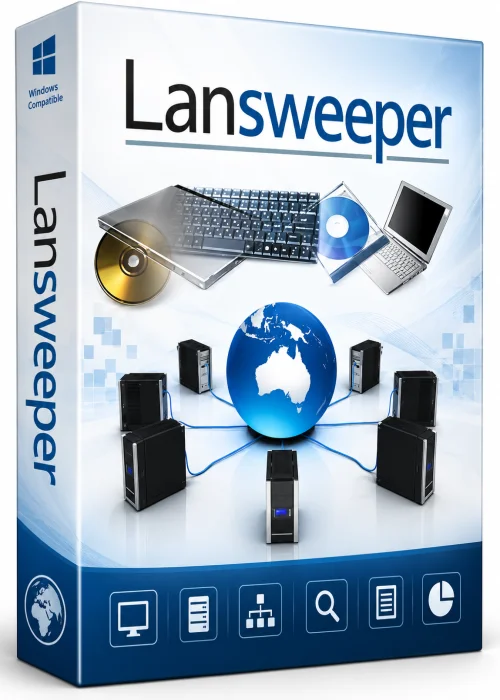
LanSweeper Full PC
Network Inventory and Audit Tool
Overview
Introduction and Overview
LanSweeper Full PC is a comprehensive IT asset management and network discovery platform that has become a staple for system administrators, IT managers, and MSPs. Designed to automatically scan every device connected to your network, LanSweeper provides deep visibility into your IT infrastructure without the need for intrusive agents in most cases. It helps you keep track of hardware, software, installed patches, and user accounts, all from a single web-based console. With its powerful scanning engine, LanSweeper Full PC can detect virtually any networked device—including computers, servers, printers, switches, and even virtual hosts—and compile detailed reports that support license compliance, software audits, and security assessments. Whether you are managing a small office or a large enterprise, LanSweeper aims to simplify asset management, reduce manual inventory efforts, and provide accurate, actionable data.
Key Features
- Automated Network Discovery: Scans both Windows and non-Windows devices (Linux, Mac, VMware, etc.) using protocols like WMI, SSH, SNMP, and NetBIOS.
- Agentless Scanning: Removes the hassle of installing client software on every endpoint; active directory integration accelerates user and device identification.
- Software & License Management: Tracks software installations, usage, and license compliance to prevent over-purchasing or illegal usage.
- Custom Reports & Dashboards: Build ITIL-ready reports or use the built-in 'Helpdesk' and 'Report' modules to visualize your infrastructure.
- Patch Management: Identify missing Windows and third-party patches through integration with Microsoft SCCM and WSUS.
- Cloud & Hybrid Support: Scan assets in Microsoft 365, Azure Active Directory, and AWS to consolidate both on-premise and cloud assets.
- Web-Based Console: Access your inventory from anywhere using a modern browser; no dedicated client needed for daily use.
System Requirements
Minimum Requirements:
- CPU: Dual-core processor (64-bit)
- RAM: 4 GB
- Disk Space: 20 GB free space
- OS: Windows Server 2012 R2 or Windows 10 (64-bit)
- Database: SQL Server 2012 Express (installer can set this up automatically)
Recommended Requirements:
- CPU: Quad-core (Intel Xeon or modern i5/i7) or higher
- RAM: 16 GB or more depending on network size
- Disk Space: SSD with 100 GB+
- OS: Windows Server 2019 / 2022
- Database: SQL Server 2019 or 2022 Standard/Enterprise
- Network: Ethernet adapters that support SNMP and WMI traffic
How to Install and Use
Step-by-step Installation:
- Download the LanSweeper installer from the official website and run as administrator.
- Choose your installation language and accept the license agreement.
- Select the components: LanSweeper Server, Console (optional), and Database. For first-time users, the 'Quick Install' option is easiest as it configures SQL Express automatically.
- Enter the credentials for the SQL instance and choose a service account; a dedicated domain service account is recommended for production scanning.
- After installation, open the web console via http://localhost or the server IP. The initial setup wizard will create the database schema.
- Add your Active Directory domain or IP ranges in 'Configuration > Active Directory' or 'Scanning > Ranges'.
- Click 'Scan Now' to run your first discovery. You can monitor progress in the 'Scanning' tab.
- Once scans complete, browse the 'Inventory', 'Software', and 'Users' sections to verify data. Create custom reports or schedule recurring scans.
Usage Tip: Install the LanSweeper Console on an administrator PC for easier remote management, but always rely on the web interface for day-to-day visibility.
Pros and Cons
Pros:
- Free tier available for up to 100 assets, making it accessible for small businesses.
- Agentless scanning significantly reduces deployment time and complexity.
- Very comprehensive discovery supports a wide range of network devices.
- Strong built-in reporting for software license compliance and asset lifecycle management.
- Extensible with PowerShell scripts and custom reporting tools.
Cons:
- Initial configuration can be complex for large, segmented networks.
- Some advanced features (like cloud asset scanning) require a paid plan.
- Web interface can be slow on low-end servers when generating large reports.
- Missing built-in remote desktop tool; requires using third-party tools for remote sessions.
Conclusion
LanSweeper Full PC remains one of the most powerful yet cost-effective network inventory and asset management tools on the market. Its agentless scanning capabilities, combined with clear visibility into software installations and license compliance, give IT professionals the data they need to make informed decisions. The learning curve is moderate, but the benefits of automated discovery and consolidated reporting often outweigh any initial setup complexity. If you are looking to gain full control over your networked assets and prevent 'shadow IT', LanSweeper is a solid choice that scales with your organization. Download the full version today to put your IT inventory on autopilot.